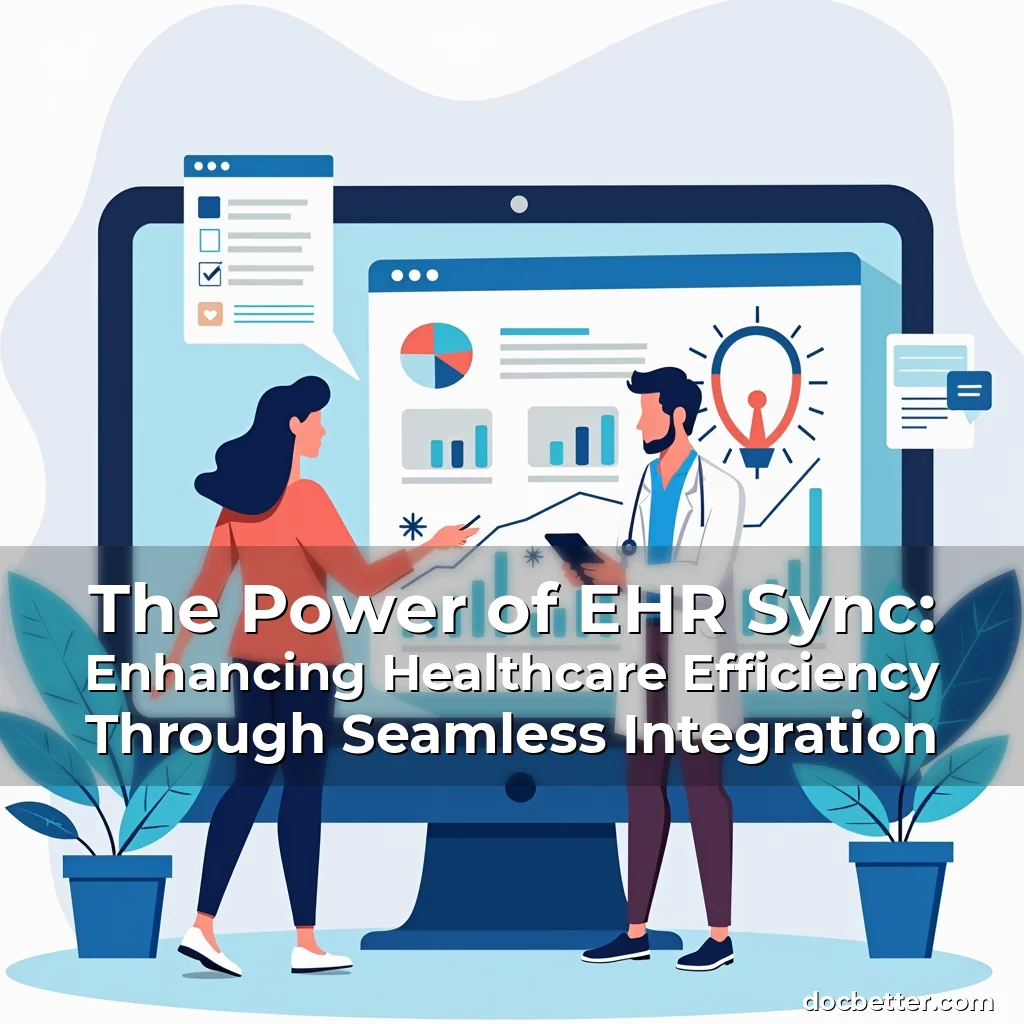
The Power of EHR Sync: Enhancing Healthcare Efficiency Through Seamless Integration
In today’s rapidly evolving healthcare landscape, electronic health records (EHRs) have become essential tools for managing patient data efficiently. However, their true potential is unlocked only when they are synchronized across various platforms and systems. This synchronization, known as EHR sync, plays a crucial role in ensuring that medical professionals can access up-to-date information at any time.
EHR sync goes beyond simple data transfer; it involves complex processes designed to maintain accuracy and consistency across different software environments. As healthcare providers increasingly rely on digital solutions, mastering these synchronization techniques has become vital for improving care quality and operational efficiency.
Understanding the Fundamentals of EHR Synchronization
EHR synchronization refers to the process of aligning data between disparate electronic health record systems. This alignment ensures that every piece of patient information remains consistent regardless of which platform is used by healthcare staff.
At its core, EHR sync requires precise communication protocols between different software applications. These protocols must be robust enough to handle vast amounts of sensitive medical data while maintaining strict security standards.
Successful implementation of EHR sync depends heavily on interoperability standards such as HL7 FHIR and DICOM. These frameworks provide common languages through which diverse systems can exchange clinical information without losing critical details during transmission.
Healthcare organizations often face challenges related to legacy system integration when implementing new synchronization technologies. Older systems may lack modern APIs necessary for seamless data sharing, requiring additional customization efforts.
- Data Consistency: Ensuring identical records appear uniformly across all connected devices helps prevent errors caused by outdated or conflicting information.
- Real-Time Updates: Immediate synchronization allows caregivers to view the most current treatment plans and medication lists, reducing risks associated with delayed information.
Why EHR Sync Matters for Modern Healthcare Delivery
With patients frequently interacting with multiple healthcare providers, having synchronized EHR systems becomes non-negotiable for delivering coordinated care. Disconnected records lead to fragmented services that compromise both safety and effectiveness.
Studies show that hospitals using advanced EHR sync capabilities experience fewer adverse drug events due to real-time visibility into complete medication histories. This transparency significantly reduces prescription errors linked to incomplete documentation.
Clinicians benefit from EHR sync through streamlined workflows enabled by automatic updates from lab results, imaging reports, and physician notes. Time saved on manual data entry translates directly into improved patient interaction opportunities.
Patient satisfaction scores tend to increase when individuals perceive their care teams as well-coordinated. Transparent information flow fosters trust and promotes better adherence to prescribed treatments and follow-up appointments.
Impact on Patient Safety
A recent analysis published in the Journal of Medical Systems found that facilities with effective EHR sync mechanisms saw a 38% reduction in medication-related adverse events compared to those relying on traditional methods. This dramatic improvement highlights the life-saving potential of properly implemented synchronization strategies.
Duplicated test orders resulting from disconnected systems cost U.S. hospitals an estimated $6 billion annually according to Health Affairs research. Implementing robust EHR sync can help eliminate redundant procedures while preserving diagnostic integrity.
Technical Challenges in Achieving Effective EHR Synchronization
Despite clear benefits, achieving flawless EHR sync presents significant technical hurdles. Differences in data formats and structure across vendor-specific platforms complicate standardization efforts substantially.
Vendors often develop proprietary algorithms for processing clinical data, making direct compatibility difficult unless standardized interfaces are explicitly built into their architecture. This creates roadblocks for cross-platform integration initiatives.
Data encryption requirements add another layer of complexity since secure transmissions must occur simultaneously with accurate format conversions. Balancing these dual demands increases development timelines and costs considerably.
To address these issues effectively, many organizations opt for middleware solutions acting as translation layers between incompatible systems. While beneficial, deploying such intermediaries introduces new maintenance responsibilities and potential points of failure.
- Legacy System Limitations: Outdated infrastructure often lacks support for contemporary synchronization protocols, necessitating costly upgrades or replacements.
- Vendor Lock-In Risks: Exclusive partnerships with single vendors might restrict flexibility in choosing optimal syncing configurations tailored to organizational needs.
Best Practices for Implementing Successful EHR Synchronization
Organizations aiming to implement successful EHR sync must adopt strategic approaches grounded in thorough preparation and continuous evaluation. Establishing clear objectives upfront provides direction for selecting appropriate technologies and methodologies.
Engaging stakeholders early in the planning phase ensures all relevant departments understand expectations and contribute meaningful input regarding workflow requirements. Cross-functional collaboration enhances the likelihood of meeting practical usage scenarios post-deployment.
Rigorous testing phases involving actual user groups help identify usability issues before full-scale rollout. Feedback gathered during pilot programs informs necessary adjustments to optimize performance metrics ahead of official launch dates.
Ongoing monitoring after deployment maintains long-term success by identifying emerging problems promptly. Regular audits ensure compliance with regulatory mandates concerning data privacy and security protections.
Choosing the Right EHR Platform
Selecting compatible EHR platforms is foundational for effective synchronization outcomes. Organizations should prioritize vendors demonstrating commitment to open standards rather than closed ecosystems.
Vendors adhering to ONC certification criteria offer greater assurance regarding interoperability capabilities. Such certifications validate adherence to national benchmarks for safe and efficient health information exchange practices.
Evaluating existing IT infrastructures helps determine whether current hardware and network capacities suffice for supporting high-volume data transfers typical of active EHR environments.
Considering future scalability is equally important since technology needs evolve alongside growing patient populations and expanding service offerings within healthcare institutions.
Case Studies Demonstrating Real-World Benefits of EHR Sync
Hospitals implementing enterprise-wide EHR sync solutions report substantial improvements in clinical decision-making supported by comprehensive data accessibility. One leading academic medical center reduced readmission rates by 22% following implementation of centralized synchronization protocols.
Community clinics utilizing cloud-based EHR sync models experienced faster appointment scheduling cycles thanks to instant availability of updated patient histories among participating physicians. Wait times decreased by an average of 40 minutes per visit.
Specialty centers integrating telehealth components with synchronized EHRs achieved higher remote consultation efficacy. Patients received timely interventions based on real-time updates from wearable health monitors linked securely through synced platforms.
Regional health networks employing blockchain-enhanced EHR sync reported enhanced audit trails for tracking data modifications. This feature proved invaluable during regulatory inspections focused on data integrity verification processes.
- Cost Savings: A mid-sized hospital realized annual savings exceeding $2 million by eliminating duplicate tests and minimizing administrative overhead tied to manual data reconciliation tasks.
- Operational Efficiency Gains: Nurses spent 30% less time on documentation duties once EHR sync simplified accessing consolidated patient profiles accessible via mobile devices.
Federal Regulations Shaping EHR Sync Implementation
Government agencies play a pivotal role in defining legal parameters governing how EHR data should be managed and shared. Compliance with HIPAA regulations forms the bedrock of all legitimate EHR sync implementations.
The 21st Century Cures Act introduced specific provisions aimed at promoting interoperability among health IT systems. These include mandatory adoption of application programming interface (API) standards facilitating easier data exchanges between authorized entities.
Meaningful Use program incentives initially encouraged widespread EHR adoption but now emphasize value-based care principles requiring robust data connectivity features. Non-compliance penalties continue to serve as strong motivators for maintaining up-to-date synchronization protocols.
Emerging legislation targeting data portability rights further complicates the regulatory environment. Entities must balance consumer empowerment goals with ongoing obligations to protect confidential health information against unauthorized disclosures.
Compliance Considerations
Implementing EHR sync solutions necessitates meticulous attention to regulatory compliance aspects affecting data handling procedures. Auditing mechanisms must verify that all transmitted information meets required confidentiality thresholds.
Training programs for staff involved in managing synchronized data flows ensure awareness of legal boundaries surrounding permissible uses of protected health information (PHI). Ongoing education reinforces responsible behavior patterns even amid changing legislative landscapes.
Data breach response plans need constant updating to reflect latest threats facing interconnected health information systems. Proactive measures reduce vulnerability exposure levels significantly compared to reactive approaches taken after incidents occur.
Regular participation in industry forums keeps administrators informed about upcoming regulatory changes likely impacting current EHR sync operations. Staying ahead of policy shifts prevents unexpected disruptions to established workflows.
The Future of EHR Synchronization Technology
Advancements in artificial intelligence promise transformative changes in how EHR data gets processed and utilized within synchronized systems. Machine learning algorithms could soon predict patient deterioration trends based on historical pattern analyses embedded in real-time data streams.
Quantum computing developments may eventually enable instantaneous decryption of highly encrypted health datasets without compromising security standards currently deemed unbreakable under classical computational models.
Blockchain technology continues showing promise for securing distributed ledger architectures where each transaction gets timestamped immutably across multiple nodes forming resilient data networks resistant to tampering attempts.
As internet of things (IoT) devices proliferate within clinical settings, EHR sync will need to accommodate exponential growth in sensor-generated biometric readings integrated seamlessly into central repositories for holistic patient profiling.
- AI-Powered Insights: Predictive analytics derived from synchronized EHR data could revolutionize preventive medicine by enabling earlier identification of chronic disease risk factors previously undetectable through conventional assessment methods.
- Smart Device Integration: Wearables transmitting heart rate variability measurements continuously will require sophisticated syncing mechanisms capable of filtering noise from genuine health indicators worthy of clinical action.
Conclusion
EHR synchronization represents a cornerstone advancement driving modern healthcare transformation. Its impact spans from enhancing clinical decision-making capabilities to streamlining administrative functions traditionally burdened by disjointed information silos.
By embracing cutting-edge synchronization technologies aligned with federal guidelines, healthcare providers position themselves strategically to deliver superior patient experiences while optimizing resource utilization effectively across entire delivery networks.